In this story
Master Loose-Leash Walking in Calgary: A Calm Companion for Busy Sidewalks
Walking your dog in Calgary is a wonderful way to enjoy the city’s beautiful parks, from the urban charm of Inglewood Park to the rolling hills of Nose Hill Park. But let’s be honest, the journey to peaceful strolls is often paved with the occasional yank on the leash and a dog who hasn’t yet mastered the art of four-legged traffic control. Teaching your dog to walk politely on a loose leash transforms these city excursions from stressful battles to enjoyable adventures for both of you.
In a city with wide sidewalks bustling with people, cyclists, and other dogs, a calm, obedient walking companion isn’t just convenient – it’s essential. Imagine navigating the busy pathways near the Petro-Canada Centre or the green spaces around Broomhill Commons without constant tension. Loose-leash walking allows for better control, safer interactions, and simply makes the experience more pleasant for everyone involved.
Why Loose-Leash Walking Matters in Calgary
Beyond the immediate benefits of a slack leash, there are several compelling reasons to focus on this training:
Safety First
Calgary’s diverse environments demand attention. A dog pulling wildly could accidentally lead you into traffic, onto the street, or into dangerous situations near ponds or cliffs like those found in Fish Creek Park. A slack leash gives you the ability to make quick corrections and maintain awareness of your surroundings.
Respect for Public Spaces
Calgary is known for its dog-friendly parks and public spaces. Whether you’re enjoying the amenities at Bragg Creek Regional Park or a casual walk through the downtown core, polite walking respects other people’s right to enjoy these areas without constant tugging.
Strengthening the Human-Canine Bond
Training is communication. Teaching your dog to walk politely builds trust and enhances your connection. When walks become cooperative rather than confrontational, the bond between you and your companion deepens.
Getting Started: The Foundation of Loose-Leash Walking
Training requires patience, consistency, and positive reinforcement. Here’s how to begin:
1. Assess Your Equipment
Before focusing on your dog’s behavior, ensure your gear supports good walking:
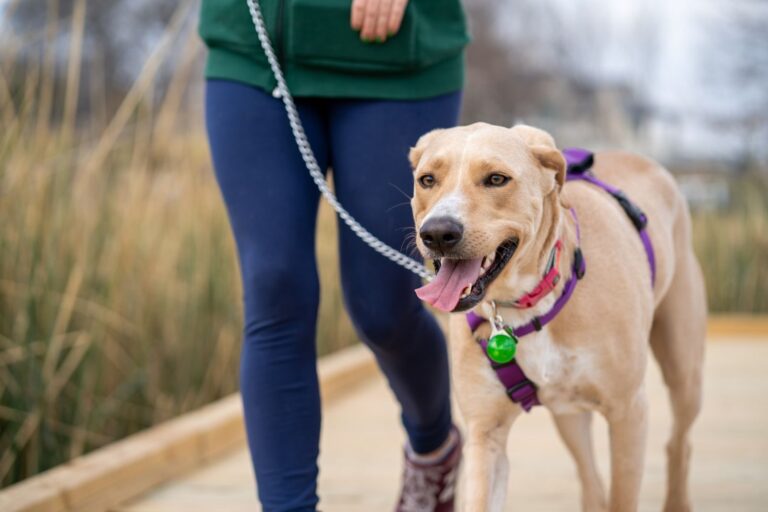
- Harness vs. Collar: Most experts recommend a harness for training, especially for pulling breeds or puppies. Harnesses distribute pressure more evenly and are less likely to choke your dog.
- Leash Length: A 5-6 foot leash offers enough room for polite exploration while allowing you to gently guide your dog.
- Treats: Keep high-value treats (small bits of chicken, specific dental chews, or small cheese pieces) handy for moments of success.
2. The ‘Leave It’ & ‘Come’ Are Your Secret Weapons
These commands are invaluable for leash training:
- ‘Leave It’: Practice this indoors first using a treat. When your dog snatches a treat, say “Leave it” firmly and offer a better one. Repeated practice builds this crucial command.
- ‘Come’: A reliable recall is non-negotiable for leash walking. Ensure your dog reliably comes when called before focusing on leash manners.
3. Start Indoors – The ‘Heel’ Position
Teach your dog to walk ‘heel’ indoors first. This builds the foundation of following your hand:
- Lure your dog with a treat to your left side.
- Place the treat in your open palm just ahead of your hand, at nose level.
- As your dog sniffs and reaches for the treat, say “Heel!”
- Move forward slowly, keeping the treat just ahead of you. If they follow, reward.
- Practice short sessions, ending on success.
4. Transition to the Leash Indoors
Once your dog reliably walks ‘heel’ indoors, attach the leash.
- Let them sniff the leash briefly.
- Resume the ‘heel’ command.
- If they start pulling, stop walking. Wait for the leash to slacken. As soon as it does, continue walking and reward calm following.
- This teaches that pulling stops the forward motion.
Practical Loose-Leash Walking Tips for Calgary Dog Owners
Keep First Walks Short & Sweet
Calgary’s weather can be changeable, so keep initial training sessions brief (5-10 minutes) and end on a positive note. Overwhelming your dog leads to frustration for both of you.
Practice in Low-Distraction Areas
Start in your own backyard or a quiet park like the ones near your home. Reward calm walking generously. When your dog walks politely, reward with praise or a treat.
Use Positive Reinforcement
This is the cornerstone of effective training:
- Reward Calm Leash Handling: Praise and treats when your dog walks with a loose leash.
- Ignore Pulling: When your dog pulls, stop walking. Don’t drag them. Stay still and wait for the leash to slacken.
- Mark the Moment: Use a clicker or a verbal marker like “Yes!” immediately before rewarding calm behavior.
Redirect Unwanted Behavior
When your dog pulls:
1. Stop. Halt your movement.
2. Wait. For the leash to return to slack.
3. Continue. As soon as slack appears, walk forward and reward calm walking.
Teach Alternative Focus
Keep your dog engaged in something positive:
- Scent Work: Carry a small toy with a hidden treat.
- Watch You: Keep your dog looking at you.
- Sniff (Calmly): Allow brief moments to sniff, but redirect if excitement builds.
Calgary-Specific Practice Grounds
Apply these principles in local spots:
- Nose Hill Park: Offers varied terrain, practice navigating around other dogs and people.
- Inglewood Dog Park (when quiet): Observe polite walkers for cues (from a distance!).
- Downtown Sidewalks (off-peak hours): Practice navigating busier areas.
- Calgary Trail: For longer, calmer training sessions once the basics are down.
Common Challenges & Solutions
My Dog Won’t Walk Near Other Dogs/People
Start far away and gradually decrease distance as they relax. Reward calm behavior. Never rush this.
My Dog Gets Excited by Every Squirrel
Keep walks focused. Use higher-value rewards. Practice briefly to avoid overwhelming them.
I’m Still Struggling After Weeks of Practice
- Revisit Basics: Ensure you’re consistently using the same cues and rewards.
- Consult a Professional: If needed, consider a positive reinforcement trainer in Calgary. Look for organizations like the Calgary Kennel Club or local pet charities for resources.
Making it Stick: Consistency is Key
Loose-leash walking is a skill that develops over time. It requires patience and persistence:
- Be Patient: Every dog learns at their own pace.
- Be Consistent: Everyone in the household needs to use the same commands and rules.
- Keep it Fun: Make training a game, not a chore. Celebrate small successes.
- Short & Frequent: Quick sessions are more effective than one long, frustrating walk.
Final Thoughts: A Better Calgary Together
Mastering loose-leash walking enhances your daily walks in Calgary, making them more enjoyable for you and less stressful for your dog. By focusing on positive reinforcement, consistency, and understanding your dog’s needs, you’ll create a more pleasant experience for everyone. So, grab a treat, practice those commands, and enjoy the path to smoother Calgary strolls!
Pro-Tip: Many Calgary pet stores, like PetSmart or local independents, carry a variety of training treats and harnesses suitable for this kind of positive reinforcement training.