In this story
Your dog is talking to you all day long — not with barks, exactly, but with ears, eyes, tails, mouths, and the way they hold their whole body. The American Kennel Club puts it plainly: dogs communicate constantly through body language, and much of that communication is nonverbal. Learning to read it is one of the most useful skills any dog owner can build. It keeps you safer around unfamiliar dogs, helps you spot stress before it becomes a problem, and makes your bond with your own dog noticeably stronger — because suddenly you can hear what they have been saying all along.
The good news is that you do not need a behaviour degree to get good at this. You need to know what to look at, and you need to practise watching your own dog when nothing much is happening.
The First Rule: Read the Whole Dog
No single signal means anything on its own. A wagging tail does not always mean a happy dog. A yawn does not always mean a tired dog. Every signal has to be read in context, as part of the whole animal, in the situation they are in. A lip-lick right after a treat is just a dog tasting dinner. The same lip-lick at the vet clinic, with pinned ears and a tucked tail, is a dog asking for help.
So before you learn the parts, learn your dog’s neutral. Every dog carries its ears, tail, and posture a little differently at rest. A Schnauzer’s tail does not drop the way a Labrador’s does, and a curled tail can be tight or loose without meaning much of anything. Spend a few minutes watching your dog when they are relaxed at home. That baseline is what everything else is measured against — you are reading for change, not for a fixed pose.
The Tail: More Than a Wag
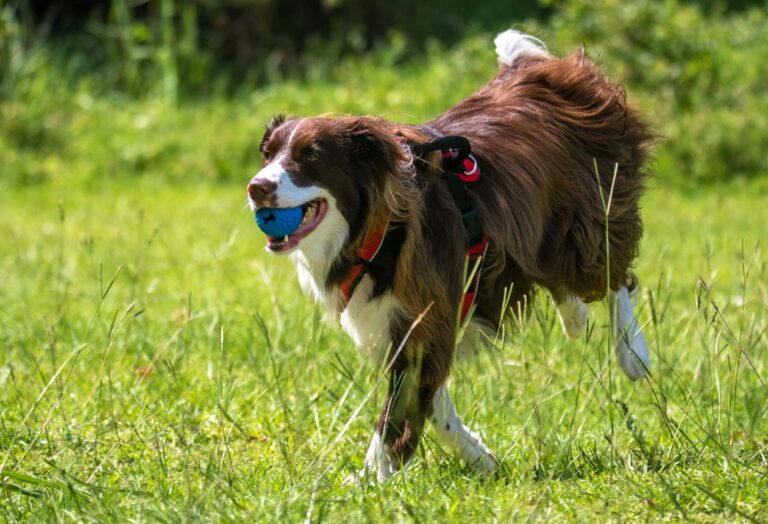
The tail is the signal most people know, and the one most people read wrong. A wagging tail simply means the dog is emotionally aroused. It does not tell you whether that arousal is happy, nervous, or confrontational — the speed, height, and looseness do.
A slow, sweeping wag that moves the whole back end is the classic relaxed, friendly wag. A fast, stiff wag held high usually means high arousal — excitement, or tension, or both. A tail held low or tucked between the legs is one of the clearest signs of fear or discomfort you will ever see. And a tail held high and still, barely moving at all, is a dog assessing a situation and deciding what to do next. Give that dog space.
Ears: Fast and Honest
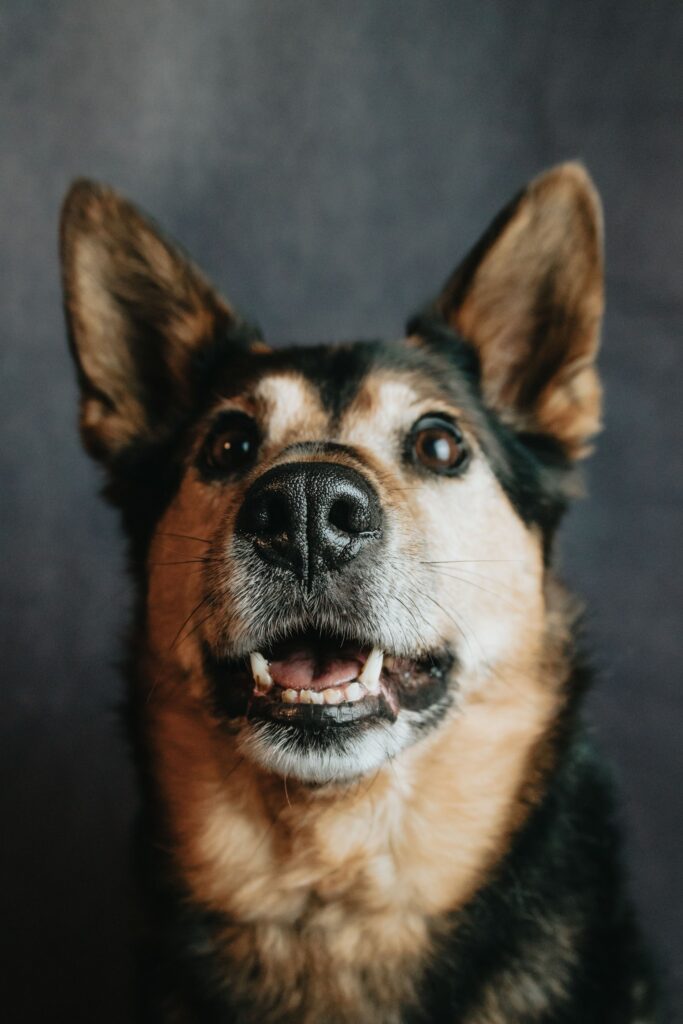
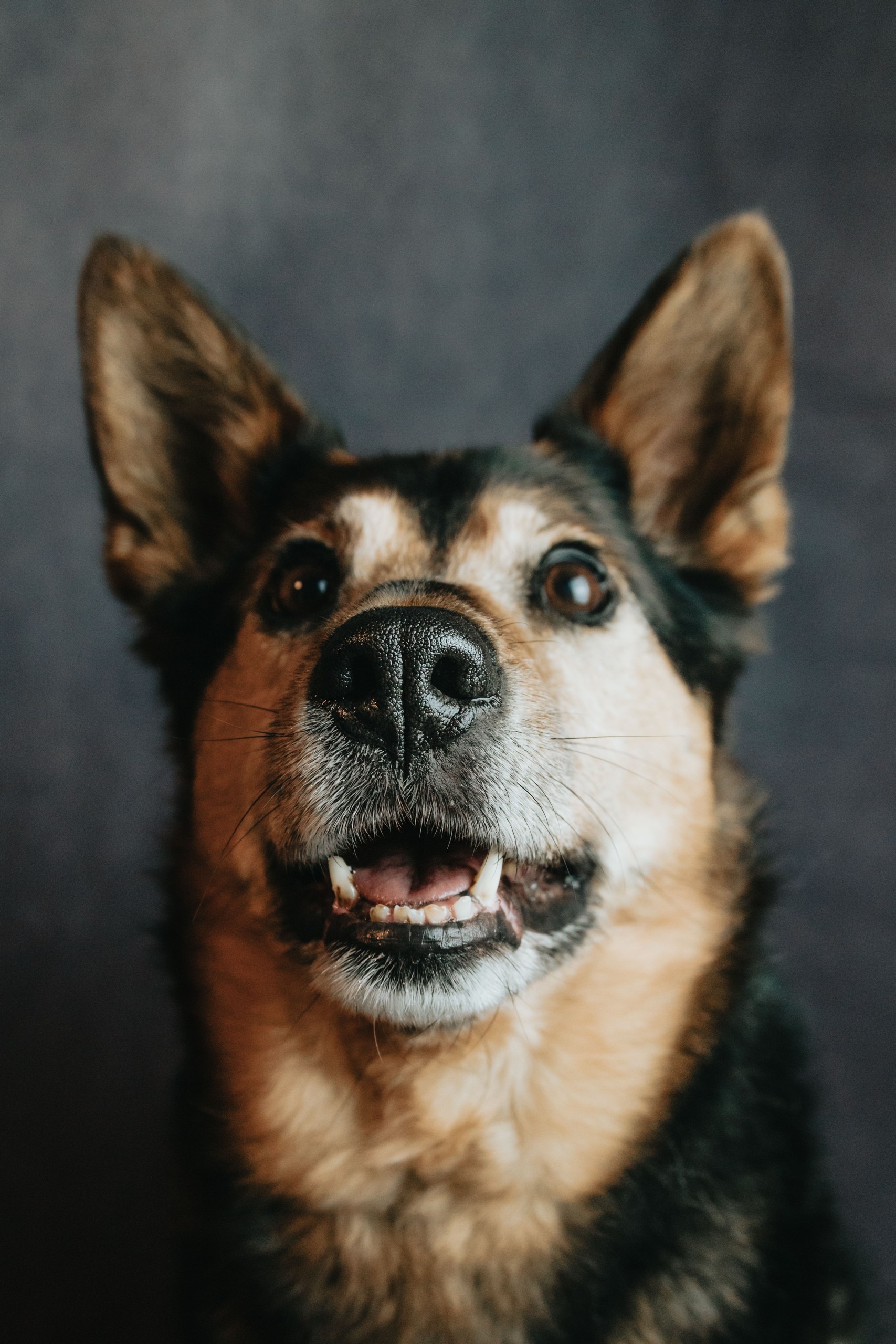
Ears are quick, mobile, and hard for a dog to fake, which makes them one of the most honest signals you can read. Ears pricked forward mean the dog is alert and locked onto something — curious, excited, or possibly confrontational, depending on the rest of the body. Ears held in their natural position, or slightly back and relaxed, mean a calm, comfortable dog. Ears pinned flat against the head mean fear, anxiety, or appeasement.
Watch for the two ears doing different things. One ear forward and one back often means a dog is listening hard — they have caught a sound, a name, or the rustle of the treat bag — and are deciding what it means. In floppy-eared or very furry dogs the signals are harder to spot, which is one more reason to learn your own dog’s neutral first.
Eyes: Soft, Hard, and Whale Eye
The difference between a relaxed dog and a stressed one often shows up in the eyes first. Soft eyes — relaxed eyelids, a gentle expression, maybe a slow blink — mean a calm, comfortable dog. Hard eyes are the opposite: intense, fixed, unblinking, with the dog staring straight at something. A prolonged hard stare is a warning signal, and it is one to respect. Direct, sustained eye contact is threatening in dog language, even though humans tend to read it as friendly.
Then there is whale eye: the whites of the eyes showing in a crescent shape while the dog turns its head away. That is a dog feeling stressed, cornered, or pushed past its comfort zone. If you see whale eye — especially while the dog is holding something, like a chew or a toy — back off calmly and give the dog room. It is one of the clearest “please stop” signals dogs have, and it is often the last polite one before a growl or a snap.
The Mouth: Smiles, Yawns, and Lip-Licks
A relaxed dog’s mouth is usually open and loose, sometimes with the tongue lolling out — the classic happy-dog face. A closed mouth can be relaxed too, but pay attention to the corners: tight, pulled-forward lips mean tension, while soft, loose lips mean ease. A dog pulling its lips back to show its front teeth is not always aggressive — the famous “submissive grin” is a real thing — but combined with a stiff body and a hard stare, bared teeth are a warning to take seriously.
Two mouth signals get misread constantly. Yawning, in dogs, is often a stress signal, not a sleepy one. Dogs yawn to calm themselves in tense situations — at the vet, during a scolding, when a stranger leans over them. And the quick tongue flick, the little lip-lick that happens when there is no food around, is one of the most common signs of anxiety or discomfort. These are small signals, easy to miss, and exactly the ones worth learning to spot.
Posture: Big, Small, and the Play Bow
Posture is the whole-body summary. A confident, relaxed dog stands at full height, weight evenly distributed, body loose. A fearful dog tries to make itself small: crouched low, weight shifted back, maybe rolling onto its back with its legs tucked tight over its belly. That belly-up roll is often misread as an invitation for a belly rub — but with tucked legs and a tense body, it is appeasement, and reaching for that dog is a mistake. A loose, floppy roll with the legs sprawled out is the one that says belly rubs are welcome.
A dog leaning forward, standing tall with weight on its front paws, is alert and possibly assertive. A dog that suddenly freezes and goes rigid is experiencing significant stress — modern trainers recognize this as a dog shutting down because a situation feels overwhelming, not as submission. A frozen dog is a dog that needs the pressure removed, not a dog that has decided to behave.
And then there is the best posture of all: the play bow. Front end down, chest on the ground, hindquarters up in the air, often with a wiggling rear end. It is a clear invitation to play, and a dog’s way of saying that the bouncing and mouthing that follow are meant in fun.
The Stress Signals Most People Miss
Norwegian trainer Turid Rugaas coined the term “calming signals” for the dozens of small behaviours dogs use to avoid conflict and tell others they are not a threat. Many are easy to overlook: turning the head away, blinking, sniffing the ground suddenly, yawning, lip-licking, and moving slowly. A dog that turns its head away from you is not ignoring you — it is being polite, asking you to calm down, and handling the situation well. A dog that starts sniffing the ground intently the moment another dog approaches is often not interested in the smell at all. It is buying time and lowering the tension.
Learning these quiet signals changes how you see everyday moments: the dog that yawns when a child hugs it, the dog that licks its lips when a stranger reaches over its head, the dog that freezes for half a second before deciding whether to greet. Each one is a dog communicating, and each one is a chance to respond before things escalate.
Putting It Together
Try this the next time you are at the dog park. Find a relaxed dog and a tense dog and compare them, part by part. The relaxed dog has a loose body, soft eyes, a mouth hanging open, ears in their natural spot, and a tail sweeping wide. The tense dog has a stiff body, hard eyes, a closed mouth with tight lips, ears forward or pinned, and a tail held high and still or tucked low. Once you have seen the two side by side, you will not unsee it.
A practical habit that helps: spend five minutes a day just watching your dog. Not training, not playing — watching. Notice the ears when the doorbell rings, the eyes when a guest arrives, the tail when you pick up the leash. Within a week you will know your dog’s vocabulary better than any article can teach you, and that is the whole point. Dogs have been talking to us all along. We just had to learn to listen.