In this story
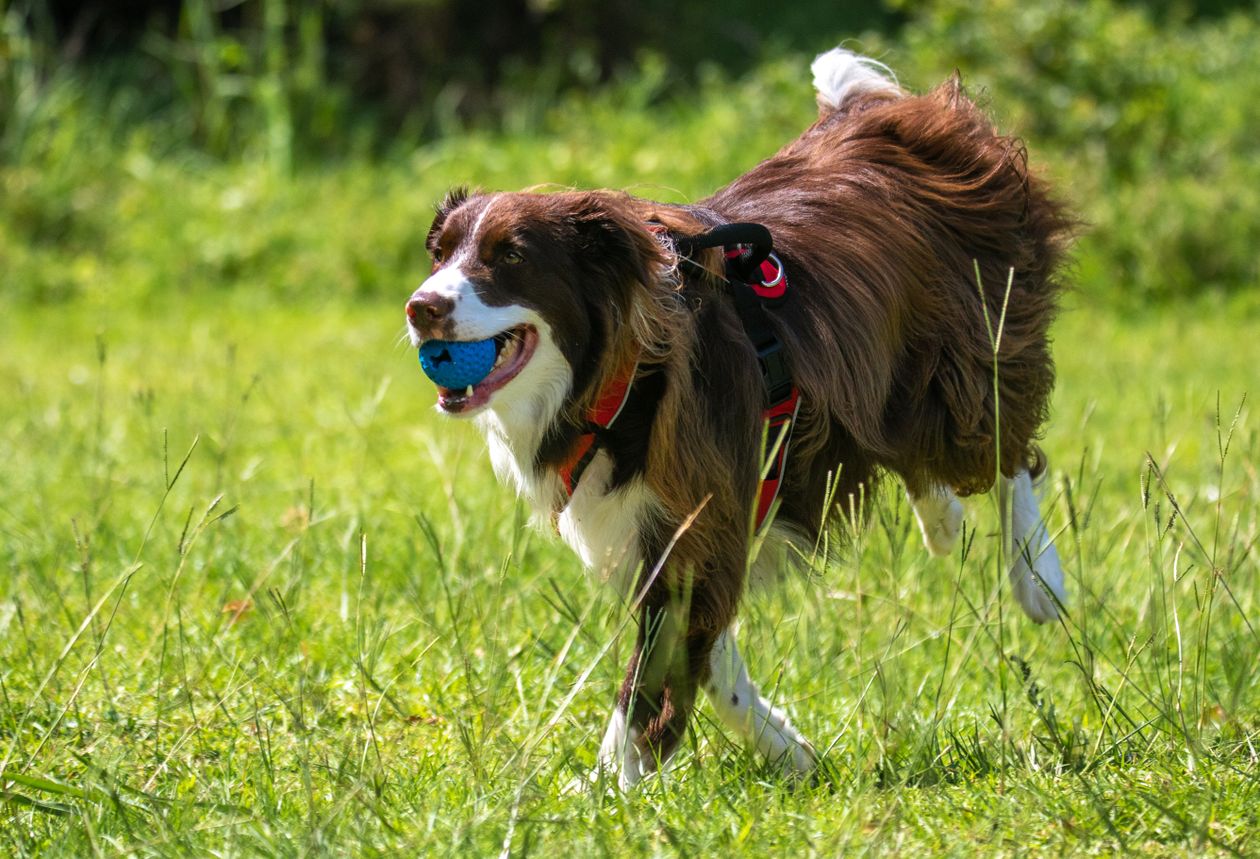
Most healthy adult dogs need between 30 minutes and 2 hours of exercise every day. Where your dog lands in that range depends mostly on breed, age, and health: a Border Collie needs far more than a Bulldog, and puppies and seniors follow different rules altogether.
How much exercise do puppies need?
Less than most people think — and in shorter bursts. A widely used rule of thumb is about five minutes of structured exercise per month of age, once or twice a day, which works out to roughly 20 minutes at a time for a four-month-old. Puppies naturally play in short bursts with plenty of rest in between, and their joints and growth plates are still developing, so long forced walks and high-impact exercise should wait. Several short walks and play sessions suit a puppy far better than one long outing.
How much exercise do adult dogs need by breed type?
Breed — what a dog was bred to do — is the biggest factor. General ranges for healthy adult dogs:
- Herding and sporting breeds (Border Collies, Australian Shepherds, Labrador Retrievers, Golden Retrievers): the highest needs, commonly one to two hours or more a day. Herding breeds also need mental work, like training games and scent puzzles, on top of the physical exercise.
- Working breeds (Boxers, Siberian Huskies, Rottweilers): substantial daily activity, ideally with a job or a challenge to focus their energy.
- Hounds: moderate to high needs. Scent hounds like Beagles are happiest with long sniffing walks and scent games, while sighthounds are sprinters who prefer short bursts followed by a long nap.
- Terriers: energetic in bursts, and often up for a good game of chase or fetch; active play and walks totalling around an hour suits most.
- Toy and companion breeds (Chihuahuas, Pomeranians, Shih Tzus): often around 30 minutes a day — but they still need daily activity and enrichment. Small legs, real needs.
- Flat-faced breeds (Bulldogs, Pugs, French Bulldogs): shorter, gentler sessions, with extra care in the heat, because their breathing makes it harder for them to cool themselves down.
Have a mixed-breed dog? Consider the breeds in the mix — then pay more attention to the dog in front of you. Energy level and body condition are your best guides.
Does a dog’s size decide how much exercise they need?
Not really. Size alone is a poor predictor; what a dog was bred for matters more. A compact Jack Russell Terrier can outlast a much larger Basset Hound, and giant breeds like Great Danes generally do best on moderate, joint-friendly exercise rather than long runs. Use breed type, age, and your individual dog’s behaviour as the guide — not the number on the scale.
How much exercise do senior dogs need?
Senior dogs still need daily exercise — it helps maintain muscle, mobility, and a healthy weight — but the format changes: shorter, gentler, more frequent outings at their pace, rather than one long hike. Let your senior set the speed, favour soft, even ground, and allow easier days after bigger adventures. Check with your veterinarian about the right level for your older dog, especially if they have arthritis or another health condition, and mention any sudden drop in stamina.
How many walks a day does a dog need?
Most adult dogs do best with at least two outings a day, and many benefit from three. Splitting exercise into two or more sessions spreads the activity out and breaks up the day, and the walks typically add up to 30 to 60 or more minutes of walking for an average dog. Puppies need more frequent, shorter trips out, and seniors do best with little and often.
What counts as exercise?
More than walking. Fetch, swimming, play with other dogs, training sessions, and scent games all count toward the daily total. Mental exercise is real exercise, too: the AKC notes that making a dog concentrate for just 10 to 15 minutes — a focused training session or working at a puzzle feeder — can be genuinely tiring. On a bitter Canadian winter day, indoor training, puzzle toys, and a scatter-feeding game can take the edge off when a long walk isn’t realistic.
What are the signs my dog isn’t getting enough exercise?
An under-exercised dog usually tells you. Destructive chewing and digging, restlessness and pacing, excessive barking, over-the-top greetings, and gradual weight gain are the classic signs. As the ASPCA puts it, dogs are built to play, sniff, chew, and scavenge — and a dog who isn’t given outlets for those drives will find their own. If the behaviour settles once you add activity and enrichment, you’ve found your answer.
Can a dog get too much exercise?
Yes. Signs you’ve overdone it include limping or stiffness after outings, lagging behind or lying down mid-walk, heavy panting that takes a long time to settle, worn or sore paw pads, and reluctance to head out the next day. Build up gradually when starting a new routine, take extra care in hot weather — heat is genuinely dangerous for flat-faced breeds — and give muscles time to recover between hard days.
There’s no single magic number, but there is a right amount for your dog: enough that they’re contentedly tired, fit, and calm at home, without being sore or wiped out the next day. Start with the ranges above, adjust based on your dog’s behaviour, and check with your veterinarian before setting an exercise plan for a puppy, a senior, or a dog with a health condition — they’ll help you tailor it to the dog you have.
Related posts:
 Off-Leash Recall Training: Get Your Dog Coming Back Every Time
 Loose-Leash Walking: Teach Your Dog to Walk Without Pulling
 Why Does My Dog Eat Grass? Causes, Risks and When to Worry
 How Often Should I Feed My Dog? A Simple Schedule by Age
 Why Is My Dog Shaking? Common Causes and When It’s an Emergency