In this story
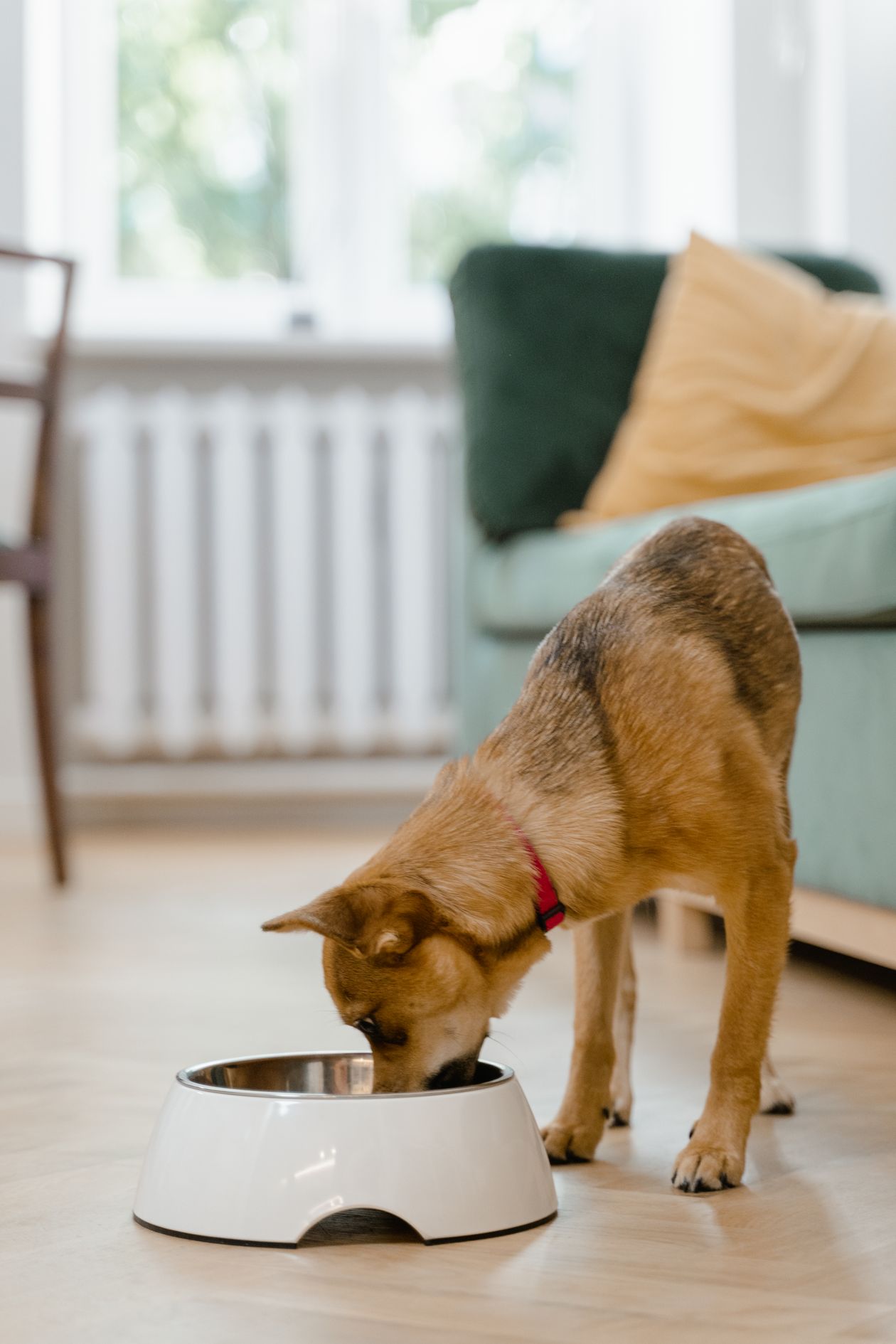
Most adult dogs do best on two meals a day, roughly 8 to 12 hours apart. Puppies need more: usually four meals a day as young babies, stepping down to three, then two as they grow. Seniors generally stay on two meals, though some do better with two or three smaller ones. Whatever the age, regular mealtimes — not an always-full bowl — make it far easier to keep your dog at a healthy weight.
How often should a puppy eat?
Young puppies have small stomachs, fast metabolisms and a lot of growing to do, so their daily food has to come in frequent, smaller meals. The AKC’s widely used timeline looks like this:
- 6 to 12 weeks: four meals a day. Very small and toy breeds may need even more frequent small meals, because tiny puppies can run low on blood sugar if they go too long without eating.
- 3 to 6 months: three meals a day. Somewhere in this window, most puppies drop the fourth meal, and the puppy potbelly starts to disappear.
- 6 to 12 months: two meals a day. This is also when most puppies transition from puppy food to adult food — smaller breeds often switch around 7 to 9 months, larger breeds at 12 to 14 months, and erring on the side of staying on puppy food a little too long is safer than switching too early. Spaying or neutering slightly lowers a puppy’s energy needs, so portions may need a small adjustment afterward.
Feed measured amounts at set times rather than topping up the bowl all day, and don’t leave food down for more than about 15 to 20 minutes — it discourages picky habits and lets you notice right away if a puppy skips a meal, which is always worth paying attention to at this age.
How often should an adult dog eat?
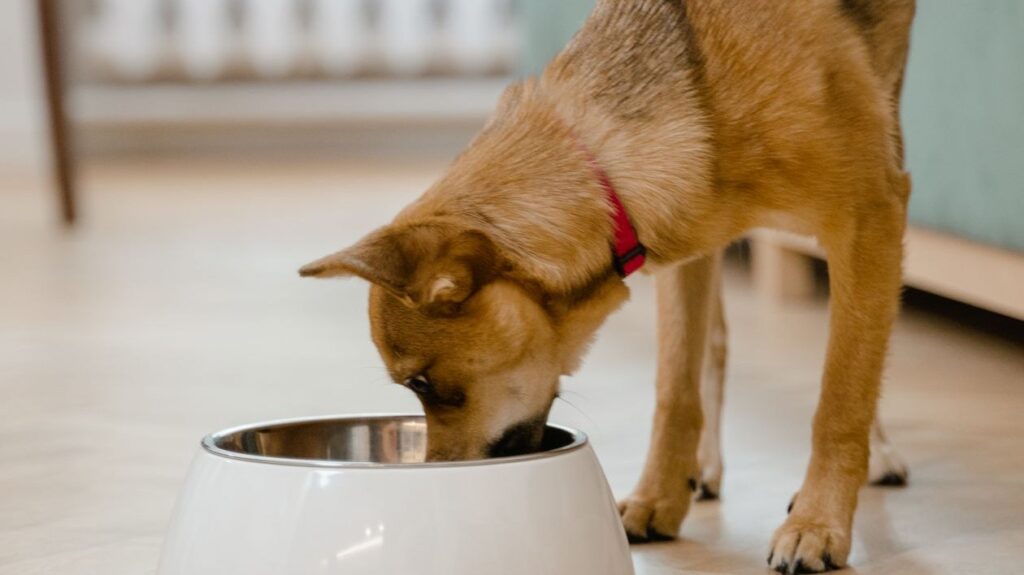
Two meals a day is the standard recommendation for adult dogs, and it’s what most veterinarians advise — the AKC notes that vets recommend feeding at least twice daily. Splitting the day’s food into a morning and an evening meal keeps energy steadier, is easier on the stomach than one large meal, and gives you two natural checkpoints a day: a dog who suddenly leaves breakfast is telling you something.
Routine matters as much as frequency. Dogs thrive on predictable mealtimes, and a consistent schedule also makes housetraining, medication timing and weight tracking simpler. If your household runs early or late, that’s fine — consistency beats clock-watching.
How often should a senior dog eat?
Most senior dogs continue happily on two meals a day, and keeping the familiar routine is often a plus. Some older dogs do better with two or three smaller meals: appetite can become less reliable with age, digestion can slow, and dental problems can make a big meal unappealing. Watch for changes in either direction — many seniors gain weight as activity drops, but unexplained weight loss in an older dog is a reason to see your vet, not just to feed more. If your senior’s appetite, weight or energy changes noticeably, that’s a conversation for your vet, who can also advise whether a senior-formulated food makes sense.
Is it OK to feed my dog once a day?
One meal a day suits some healthy adult dogs, but twice a day remains the safer default recommendation. A single large meal is harder for some dogs to digest, and large, deep-chested breeds are generally better off with their food split, since smaller meals are linked to a lower risk of bloat. Puppies, most seniors, diabetic dogs and very small breeds should not be on one meal a day. If you’re considering the switch for a healthy adult, it’s worth a quick check with your vet first.
Is free feeding a good idea?
Free feeding — leaving food available all day — is convenient, but most vets and the AKC advise against it. It makes it nearly impossible to know how much your dog actually ate, which leads easily to gradual weight gain, and it hides one of the earliest signs of illness: a reduced appetite. In multi-dog homes it also lets one dog quietly eat everyone’s share. Measured meals at set times give you control and information that a full bowl never will.
How do I know if I’m feeding the right amount?
Start with the feeding guide on your dog’s food as a rough starting point — then judge by the dog, not the bag. The AKC’s advice is to “watch the dog, not the dish,” and the hands-on body condition check is how:
- Ribs: you should feel them easily under a thin layer of fat, without pressing hard — and they shouldn’t be visibly sticking out.
- Waist from above: looking down, there should be a visible narrowing behind the ribs.
- Tummy from the side: the belly should tuck upward toward the hind legs, not hang level or sag.
Vets score this on a 9-point body condition scale, with the middle of the scale — around 4 to 5 — the healthy target for most dogs. Recheck every few weeks and weigh your dog when you can; if the ribs are getting harder to find, trim portions slightly, and if they’re getting too prominent, add a little. Remember that treats count: they should make up no more than about 10 per cent of your dog’s daily food, and training treats come out of the day’s total, not on top of it.
When should I ask my vet about feeding amounts?
Ask your vet to help set portions whenever life changes: at your puppy’s first visits and as they grow, after spaying or neutering, when switching foods, if your dog is gaining or losing weight despite a consistent routine, or when your dog enters their senior years. Dogs with health conditions — diabetes, kidney disease, food allergies, a history of pancreatitis or bloat — should always have a feeding plan set with their vet. And any dog who suddenly stops eating, or whose appetite changes sharply, needs a vet visit rather than a menu change.
A good feeding schedule is boring in the best way: the right number of meals for your dog’s age, at the same times each day, in amounts you adjust by watching your dog’s waistline. Set the routine, check the ribs now and then, and let your vet fine-tune the rest.