In this story
A new puppy in London comes with a learning curve for everyone: the puppy learns your house, and you learn the city’s systems — a dog licence with a hard calendar deadline, a vet to find, and a first winter that may involve more snow than you were expecting.
Here is the London order of operations: licensing and its December 31 catch, the first vet visit and the city’s 24-hour emergency hospital, the first weeks at home, where to socialize a puppy around the Forest City, and the snowbelt seasons that shape a puppy’s first year.
Start with the licence
London licenses dogs under its Dog Licensing and Control By-law, PH-4, and every dog over six months old must have one. Licences are sold through the London Animal Care Centre — in person at 121 Pine Valley Boulevard, online, or by phone at 519-685-1330 — and the tag stays on your dog at all times.
Fees depend on your dog’s paperwork: $63 for a dog that is not spayed or neutered, $39 if spayed or neutered, and $33 if spayed or neutered and microchipped. Owners 65 and older save $5, and guide and service dogs are licensed free. The catch for puppy owners is the calendar: every London licence expires on December 31, no matter when you bought it, and renewals submitted from March 1 onward pick up late fees. So whenever your puppy turns six months old, buy the licence then — and put a January renewal reminder in your phone the same day.
The first vet visit — and the 2 a.m. plan
Book a first check-up within the first week or so of bringing your puppy home. That visit starts the vaccination series — core vaccines given as boosters across the first few months, with rabies added when your puppy is old enough — and covers deworming, a microchip (worth it for the licence discount alone), and timing for spaying or neutering. Every puppy’s schedule is a little different, so check with your vet for the specifics of yours.
For the middle-of-the-night emergency, London has the London Regional Veterinary Emergency and Referral Hospital at 41 Adelaide Street North, a 24-hour emergency and referral hospital — 519-432-3300. The London Animal Care Centre’s own after-hours page points pet owners there for medical emergencies involving their own pets. Save the number now, and call ahead while you are on your way so the team knows you are coming.
The first weeks at home
The first weeks are a loop of naps, meals, toilet trips and chewing, and a simple routine beats a complicated one: the same feeding times every day, a crate or pen set up as the puppy’s bedroom, and one designated toilet spot you can reach in seconds — ideally with a shovelled path to it once winter arrives. Puppy-proof one room properly instead of the whole house badly: cords up, shoes away, baby gate on.
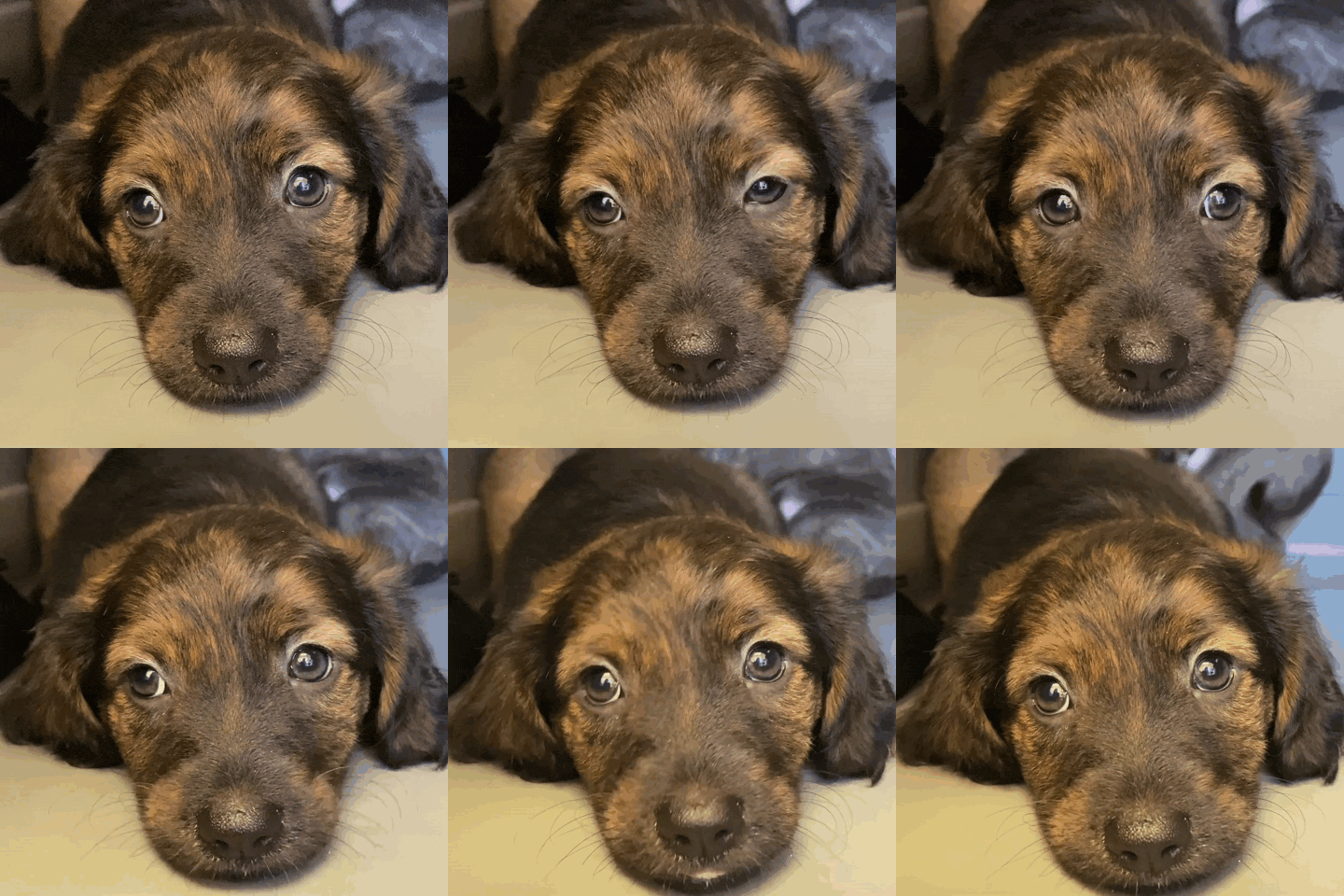
Start leash manners indoors, where there are fewer distractions, and keep sessions short — a young puppy’s real job is sleep, most of the day if you let it, and the puppy in the GIF above, chin down and eyes drooping, has the right idea. Short, boring, successful outings build the habit; at this age you are teaching the route as much as the walking.
Socialization around London
The socialization window — roughly the first three to four months — is when puppies take new people, dogs, sounds and surfaces in stride, so spend it well. Before their vaccinations are complete, carry your puppy through busy places and let them simply watch: the Thames Valley Parkway on a weekend, a patio crowd, the noise of a construction-heavy downtown street.
For structured puppy time, In Dogs We Trust, on Commissioners Road East, runs puppy classes built around calm, confident family pets — indoors, using positive methods. PAWSitively Happy Home, on Springbank Drive, also lists puppy classes among its services. And when your vet gives the all-clear for dog-park play, London’s off-leash parks are unusually kind to beginners: Greenway, Pottersburg and Stoney Creek all have separate small-dog areas, so a puppy’s first off-leash sessions can happen alongside dogs closer to their own size.
Raising a puppy in snowbelt country
London sits in the Lake Huron snowbelt, with about 194 cm of snow a year and January averaging around −5.4°C — lake-effect squalls can bury a puppy’s toilet spot between breakfast and lunch. Young puppies chill quickly, so keep winter outings short and frequent, clear a small patch down to the grass, consider a coat for small or short-haired puppies, and wipe road salt off paws at the door.
The Thames River is the other local hazard to respect. Spring melt can raise the river quickly and its banks are slippery in every season, so keep puppies leashed along the river trails — and never let a dog onto river ice in winter. Coyotes are part of life along the Thames corridor, so puppies stay supervised in the yard, especially at dawn and dusk. Summer flips the problem: on humid days, move outings to mornings and evenings, and bring shade and water on every walk.
Good to know before you go
Three London details trip up new owners. First, the licence: it expires December 31 every year, late fees start March 1, and the cheapest tier needs both a microchip and spay or neuter — book the microchip at an early vet visit and the paperwork partly pays you back. Second, off-leash running is only for the city’s designated off-leash parks; everywhere else, including the Thames Valley trails, your puppy stays leashed and under control. Third, winter here is a season, not an event: budget for a puppy coat, paw care and a surprising amount of towel laundry between November and April.
Licence, vet, routine, socials — get those four right and a London puppyhood is mostly snow zoomies and trail walks. Explore our other London guides on Canada Mutts — dog parks, trails, beaches and restaurants — for where to take yours next.