In this story
Ottawa is a house-and-yard city. Whole suburbs — Barrhaven, Kanata, Orléans, Nepean — were built around houses with real backyards, many backing onto the Greenbelt. For a dog, that yard is a four-season space: a fetch field in July, a snow playground in January, and a mud pit for a few honest weeks each spring. Compared with an apartment or a townhouse patio, it is simply more life.
That space suits bigger, busier dogs — breeds whose size and energy a smaller home works around. The six below genuinely use a backyard: they run, retrieve, dig and patrol between outings, and Ottawa’s off-leash areas and Greenbelt trails handle the rest.

Golden Retriever
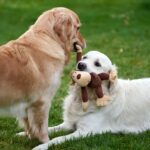
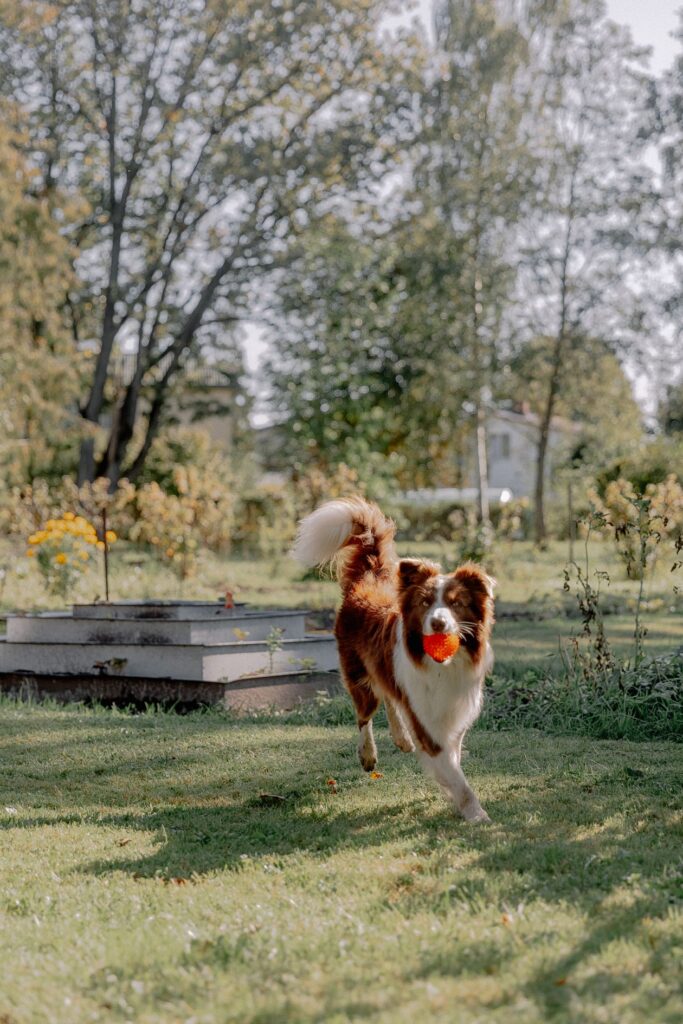
The Golden is Ottawa’s default backyard dog, and the photo above is the reason: a sociable retriever whose ideal day is fetch on the grass, kids to supervise, and people to be near. At 25 to 34 kg a Golden needs the room a house offers — a yard for games and zoomies, space indoors for a big bed — and in return it is gentle, friendly with every dog on the street, and quiet once exercised.
Goldens love an Ottawa winter; that thick double coat treats a snowy backyard as the best room in the house. The costs are shedding and enthusiasm: budget for brushing a few times a week, a muddy-paw station by the back door from March to May, and a dog who will retrieve a ball approximately forever.
Bernese Mountain Dog
The Berner is the gentle giant of the list — 32 to 52 kg of calm, affectionate Swiss farm dog built for cold weather and family life. A backyard suits it perfectly: room to lumber around, a shady corner for summer afternoons, and deep snow to sit in happily while lesser dogs ask to go back inside.
The trade-offs are size and season. A Berner needs space the way other dogs need food, its heavy black coat makes Ottawa’s humid July hard work — shade, water and early-morning exercise are the routine — and the breed’s lifespan is shorter than most. For households that want a big, steady presence, few dogs fill a backyard better.
Siberian Husky
Ottawa has the coldest winters of any Canadian capital, and the Husky thinks that is a selling point. Bred to run all day in the snow, a Husky uses a backyard as base camp — racing the fence line, digging with real purpose, and napping in a snowbank at minus 20°C by choice. The January daily mean here is around minus 10°C; a Husky calls that sweater weather.
The deal is containment and mileage. Huskies are escape artists who dig, climb and test every gate latch, and a bored one will redecorate a yard and then leave it. A secure fence, a long daily run on top of yard time, and owners who enjoy the drama — the singing, the shedding, the opinions — get a hugely entertaining dog.
English Springer Spaniel
The Springer is the energetic middleweight: 18 to 25 kg of merry, biddable dog bred for a day in wet fields. A backyard gives a Springer what it needs between outings — room for fetch, a garden to quarter methodically with its nose — and Ottawa’s rivers and Greenbelt trails give it weekends worthy of the breed.
They do need more than the yard: a Springer whose only exercise is the garden will invent projects indoors. The feathery coat and long ears need attention after wet snow and spring mud, and that coat collects burrs on Greenbelt outings. Walked and worked, a Springer is cheerful company.
Australian Cattle Dog
The Cattle Dog is the compact powerhouse: 16 to 22 kg, bred to drive cattle across Australian distances, with an engine few breeds match. In an Ottawa backyard it is all business — fetch at full intensity, a patrol route worn into the lawn, and total commitment to its person.
This is also the list’s honest warning label. Cattle Dogs herd — children, joggers and other dogs included — and an under-exercised one can become destructive. They need training, structure and a daily job, not just space. In experienced hands, though, a Cattle Dog turns a backyard into a workplace it loves.
Standard Poodle
The Standard Poodle is the athlete nobody expects: 18 to 27 kg, smart, low-shedding and far more rugged than its reputation. Standards were bred as water retrievers, and Ottawa suits them — a yard for games, canal and river paths for long walks, and snow the curly coat handles well. Indoors, a well-exercised Standard is calm.
Poodles need their minds worked as much as their legs; a bored Poodle with yard access will landscape. The coat is the other commitment: it mats without brushing and needs clipping every month or two. For an allergy-conscious household that wants a real outdoor dog, the Standard is the backyard answer.
Good to know before you go
Ottawa’s rules are clear: every dog must be registered with the City yearly — from January 1, 2026, $22 a year for a spayed or neutered dog (or a puppy under six months), $42 if not, service animals free — and the tag must be worn. Dogs must be leashed at three metres or less except on private property or in a designated off-leash area, and a household may keep at most three dogs over 20 weeks old.
The fence makes the backyard work, so know the numbers: Ottawa’s Fence By-law (No. 2003-462) allows fences up to 2.13 metres in back and side yards — use the height if you have a jumper, and check gates for latches a clever nose cannot lift. A pool or hot tub needs its own enclosure under the City’s Pool Enclosure By-law, with a permit — a dog fence alone does not satisfy it. Walk the fence line each spring for dig spots; a Husky or Cattle Dog will test the corners first.
Winter runs the yard for half the year. Shovel a path and a clear bathroom patch after big snowfalls, and remember that snow piled along the fence quietly lowers it — a determined dog can use a drift as a step over. Come spring, the melt turns well-used yards to mud, so a paw rinse by the door saves the floors. For real running, the city’s designated off-leash areas — the big Greenbelt pits at Bruce Pit and Conroy Pit among them — are where backyard dogs stretch out.
A house with a backyard in Ottawa is a dog’s whole world with a fence around it — for the right breed, that is more than enough. For more ways to get out together, explore our other Ottawa guides on Canada Mutts.