In this story
A house with a backyard is the classic Halifax dog setup. Detached homes with real yards fill the suburbs — Bedford, Dartmouth, Clayton Park, Sackville, Fall River — and compared with an apartment or a townhouse patio, a full yard changes a dog’s day: room to actually run, a game of fetch that does not end at a fence six strides away, and space to dig, wrestle and burn off steam between walks.
It also changes which breeds make sense: a backyard rewards bigger, busier dogs whose energy is a squeeze in a smaller home. Halifax adds its own conditions — January averages −5.7°C, about 215 cm of snow a year, and Atlantic rain and wind in every season. Here are six breeds built for that life.

Nova Scotia Duck Tolling Retriever
Start with the hometown hero. The Toller was bred right here in Nova Scotia, in Yarmouth County, to lure and retrieve ducks in cold water. At 17 to 23 kg it is the smallest of the retrievers, but all athlete: a Toller with a backyard, a ball and a job to do is a happy dog.
Tollers are smart and intense, and a bored one will redecorate your yard, so the space has to come with work — fetch, training games, weekend swims. The famous “Toller scream,” a high-pitched yelp of excitement, is the one backyard caution: teach a settle early, for the neighbours’ sake.
Labrador Retriever
The Lab is the default big-yard dog of the Halifax suburbs — Labs live for a thrown ball and a yard big enough to chase it in. At 25 to 36 kg a Lab needs that room: a young Lab with a backyard to patrol and a daily game of fetch is a settled house dog; one without an outlet is a landscaping service you did not hire.
Labs are weatherproof in the way this city demands — cold water, wet snow and sideways rain are all fine by them. Budget for shedding and mud: a Lab will find the wettest corner of any yard.
Border Collie
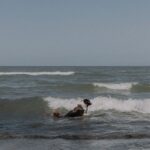
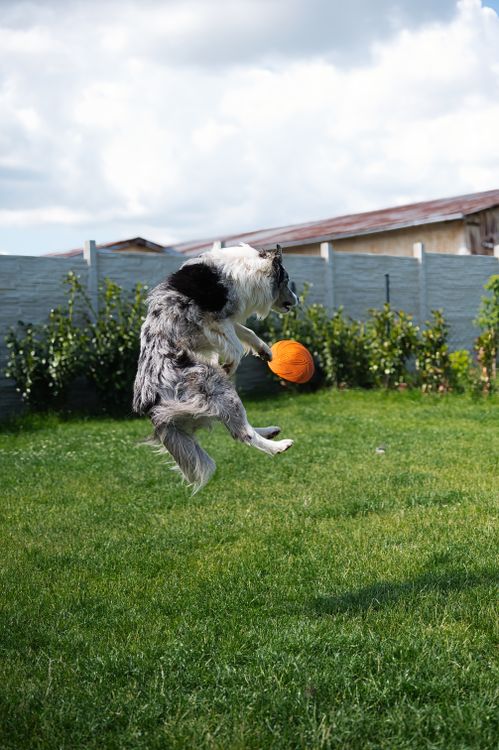
If your backyard dream includes a dog mid-air after a frisbee — like the one in the photo above — this is your breed. Border Collies are the athletes of the dog world: 14 to 20 kg of speed and focus that genuinely needs space to run flat-out. A fenced Halifax yard is a training ground — fetch, agility obstacles, herding games — and the thick coat handles snow season without complaint.
The warning is real: a Border Collie’s brain is the thing you are actually housing. A yard alone is not enough; this dog needs jobs and variety every day, or it will invent work — herding your children, re-digging your garden, learning how your gate latch works. For owners who love training, no backyard dog is more rewarding.
Bernese Mountain Dog
The Berner is the gentle giant of the backyard list: 35 to 55 kg of calm, affectionate dog, bred for Swiss winters and treating a Halifax January as home turf. Berners do not need to run all day — they need room to amble, a cool spot to sprawl, and their people nearby. A big shady yard suits them beautifully.
Two honest notes. That thick black coat means summer heat is managed carefully — shade, water and morning exercise on the warmest days. And Berners are a shorter-lived breed, worth knowing before you commit. In return: a good-natured family dog, happiest supervising the yard from a snowbank.
Siberian Husky
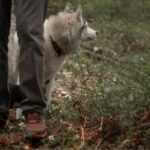
A Husky in a snowy Halifax backyard is a dog in its element — the GIF below says it all. Bred to run for hours in deep cold, Huskies treat 215 cm of annual snow as a feature, not a bug. At 16 to 27 kg they are medium-sized but maximum-energy, and a big yard for daily zoomies is close to a necessity.
Huskies come with the strongest fence warning on this list: they are escape artists — champion diggers, determined climbers, opportunists at any loose gate. A tall fence, a dig-proof base and a latch checked daily are the price of admission. They are also independent and vocal, so training and tired legs are your noise control.
Newfoundland
The Newfoundland is Atlantic Canada in dog form: a giant, sweet-tempered water dog bred for working alongside fishermen in cold seas. At 45 to 70 kg, a Newf needs a house and yard that fit — room to turn around, a gate that closes properly, and ideally a kiddie pool nearby, because this breed wants to be wet.
Newfs are calm, patient and famously good with children, and that enormous double coat is built for Nova Scotia winters. The trade-offs are drool and serious shedding. If you have the space, few breeds are more rewarding to share it with.
Good to know before you go
Start with the paperwork. Under By-Law A-700, every Halifax dog must be licensed within 20 days of getting the dog or moving to the municipality, tag worn at all times. An annual licence costs $15 for a spayed or neutered dog and $50 if not, seniors half price; a lifetime licence — $75 spayed or neutered, $200 if not — requires a microchip. Off your property, dogs must be on a leash no longer than three metres, except in designated off-leash areas like Mainland Common and the trails at Point Pleasant and Shubie parks.
Then walk your fence like an escape artist would: gaps under gates, soft soil a Husky or Toller can dig through, snow piled against the fence in February that turns a tall barrier into a step stool. Atlantic storms test latches — a gate that blows open in a nor’easter is an escape route, so a self-closing latch is money well spent. Lock gates if your yard has a pool, and give digging breeds a sanctioned digging corner before they choose one themselves.
Wildlife is part of backyard life here: deer wander suburban yards and coyotes are a known presence around the municipality, so do not leave a dog outside unattended after dark, and never leave food or garbage out. In winter, keep a path shovelled into the yard and wipe salty paws at the door; spring brings mud season, and a paw station will save your floors.
A Halifax backyard is a four-season dog park of your own — snow to dig in, grass to tear around on, the ocean never far away. Explore our other Halifax guides on Canada Mutts — dog parks, trails, beaches and restaurants — for more of the city to share with your dog.