
Winnie the Pooh Leash Walks: Teaching Your Dog the Loose-Leash Secret
Ah, Winnipeg! From the vibrant energy of The Forks to the peaceful trails of Bannerman Park, our city is a dog lover’s paradise. But let’s be honest, achieving that dream of strolling through these beautiful locales with your furry companion on a loose leash, without any tugging, pulling, or frantic lunging, takes some patience and savvy training.
Whether you’re navigating the breezes of Osborne Bay or the sometimes snowy paths of Fort Whyte, a well-behaved dog on a loose leash makes for a much more pleasant experience for everyone. This guide will walk you through the practical steps to achieve this Winnipeg dream.
Why the Loose-Leash Walk Matters in Winnipeg
- Safety First: A slack leash gives you better control in unpredictable situations, like sudden traffic, other dogs, or unexpected wildlife near our lakeshores. It reduces the risk of tripping or being jerked suddenly.
- Stress Reduction: Constant tension can make walking a stressful experience for your dog, leading to anxiety or leash reactivity (growling, snapping at other walkers). A loose leash promotes relaxation and focus.
- Better Exploration: When the leash is loose, your dog can truly explore their environment, sniff scents (like that pile of autumn leaves in Bannerman Park!), and engage with sights and sounds at a comfortable pace.
- Enjoy the View: Less pulling means you can actually see where you’re going, appreciate the city’s beauty, and chat with fellow Winnipeggers without a constant tug-of-war.
- Builds Trust: Teaching this skill is a form of communication and partnership. It strengthens the bond between you and your dog as they learn to trust your guidance.
Essential Gear for Winnipeg Loose-Leash Success
Before you start training, ensure your equipment supports loose leash walking:
- Harness vs. Collar: Harnesses are generally preferred for training, especially on a short leash, as they distribute pressure better and are less likely to choke your dog. A well-fitting flat or H-harness works well in Winnipeg’s climate.
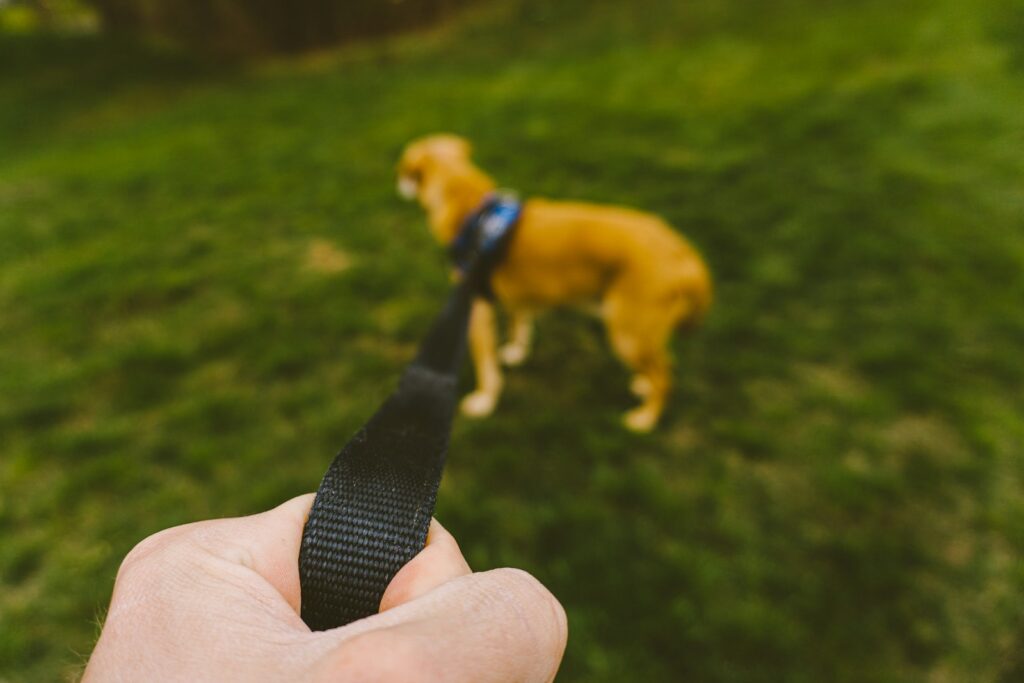
- Leash Length: A 5-6 foot leash is often ideal for training. It provides enough space for your dog to explore while keeping you in control. Avoid longer leashes initially as they can encourage pulling.
- Leash Material: A comfortable, durable leash (canvas, leather, or sturdy nylon) is key. Ensure it fits snugly but not too tight on your hand.
- Positive Reinforcement Tools: Have high-value treats ready! Small, soft, easily digestible treats work best for quick reinforcement. Keep them in a small bag or ziploc in your pocket for easy access during walks.
Foundation First
Step-by-Step: Teaching Loose-Leash Walking
This process requires patience, consistency, and positive reinforcement. Break it down into stages:
Master the ‘Heel’ Cue Indoors
- Start Leashless: Begin without the leash indoors. Teach the simple “Heel” command. Hold a treat in your hand.
- Lure & Transition: Move a treat slightly ahead of you on the left (if walking on the left side of the road, as per Manitoba rules) and say “Heel.” As your dog moves towards the treat, quickly move your hand back to your side and say “Heel” again. Reward them for touching your leg.
- Clicker Training (Optional but helpful): If you use a clicker, mark the desired behavior (touching your leg) and then immediately reward with a treat.
- Gradual Weakening: Once they reliably touch your leg, gradually reduce the lure. Praise and reward when they naturally position themselves close to your side.
Introduce the Leash Indoors
- Short Bursts: Attach the leash and harness briefly indoors. As soon as your dog walks calmly beside you without pulling, reward generously.
- Lure with Leash: Use the leash as a guide. Hold the leash loosely in one hand. Move the leash slightly ahead and ask “Heel.” Reward only when they walk beside it without tension.
- Reward Slack: The moment the leash becomes slack, mark it and reward. This teaches them that slack equals good.
Practice in Low-Distraction Areas
- Choose Wisely: Start in a quiet part of your backyard or a fenced, low-traffic area near home. Winnipeg’s parks like Kildonan Park or Kapyong Barracks offer areas to practice when less crowded.
- Short Sessions: Keep initial walks very short (a few minutes). Focus on maintaining a loose leash with minimal reward needed as they walk beside you.
- Reward Consistently: Always reward loosely leashed behavior. Even a quick reward works.
Gradual Exposure to Mild Distractions
- Increase Difficulty: Slowly introduce low-level distractions – perhaps a familiar neighbor walking by, or practicing near your front door.
- Maintain Focus: Keep sessions short and positive. Only practice when your dog is successfully walking loosely without distractions.
Practice in Winnipeg’s Parks (When Ready)
- Choose the Right Time: Start in less busy parks like Bannerman Park or Kapyong Barracks. Winnipeg’s weather might require indoor practice until the days are consistently mild.
- Be Aware of Your Surroundings: Pay attention to other dogs and people. If your dog starts pulling towards distractions, pause and reward the loose leash moment before proceeding.
Troubleshooting Common Loose-Leash Issues
Even with the best training, challenges arise, especially in our unpredictable Winnipeg weather:
Pulling Tightly (Counter-Straining)
- Mistake: Tensing up or jerking the leash when your dog pulls.
- Solution: Stop walking immediately when they pull. Hold the loose leash end and stand still. Turn slightly towards them (not away!) so they feel your body block their path. Wait for the leash to slacken, then continue walking and reward their calmness.
Lack of Focus (Becoming Distracted Easily)
- Mistake: Pushing too hard or practicing in too distracting an environment too soon.
- Solution: Revert to simpler, low-distraction training. Use extra high-value treats or play fetch beforehand to build focus. Keep sessions short and positive.
Leash Reactivity (Barking, Snapping)
- Mistake: This requires extra care. Pulling attention to your dog can worsen reactivity.
- Solution: Focus on teaching calmness on the leash first. Practice desensitization by having someone hold a stationary object (like a baggy coat or a calm dog) at a distance where your dog doesn’t react. Reward calmness. Consult a Winnipeg-certified positive reinforcement trainer if needed.
Getting Stuck on the Leash
- Mistake: If your dog freezes or turns to look at you constantly.
- Solution: Keep leash walks very short initially. Reward even the slightest forward movement. Make it a game – “Let’s go for a quick walk!” Keep it fun and positive.
Making it Stick: Winnipeg Walking Etiquette
Once your dog masters loose leash walking, maintain the skill:
- Consistency is Key: Always use the same technique. If sometimes you pull, your dog will learn that.
- Reward Loose Leash: Continue rewarding loose leash walking. Even a quick scratch or verbal praise works.
- Weather Considerations: In Winnipeg’s colder months, keep walks brisk and efficient. Dressing in layers yourself and ensuring your dog is appropriately kenneled or leashed for the temperature helps.
- Respect Other Walkers: Keep walks pleasant for everyone. A loose leash makes for friendly greetings and less stressful encounters.
Patience and Partnership
Training a dog to walk on a loose leash is a journey, not a race. It requires patience, understanding, and consistent positive reinforcement. Winnipeg’s unique environment means being prepared for weather and finding suitable training spots is part of the fun. Embrace the process, celebrate small successes, and before long, you’ll be enjoying those smooth, comfortable walks together, exploring all our wonderful city like true Winnipeggers.